Solutions
Parking Management & Guidance Systems
Stop losing revenue and floor space to a car park nobody controls
Barrier control, ANPR, ticketing, pay stations, mobile payment and bay-level guidance that turn a car park into a measured, managed asset. Deployed and supported across Saudi Arabia.
An uncontrolled car park quietly costs money in three ways: unpaid stays, staff bays occupied by visitors, and drivers circulating for a space that was free two levels up. None of it appears on a report, because nothing is measured. A parking management system exists to turn that guesswork into numbers you can act on.
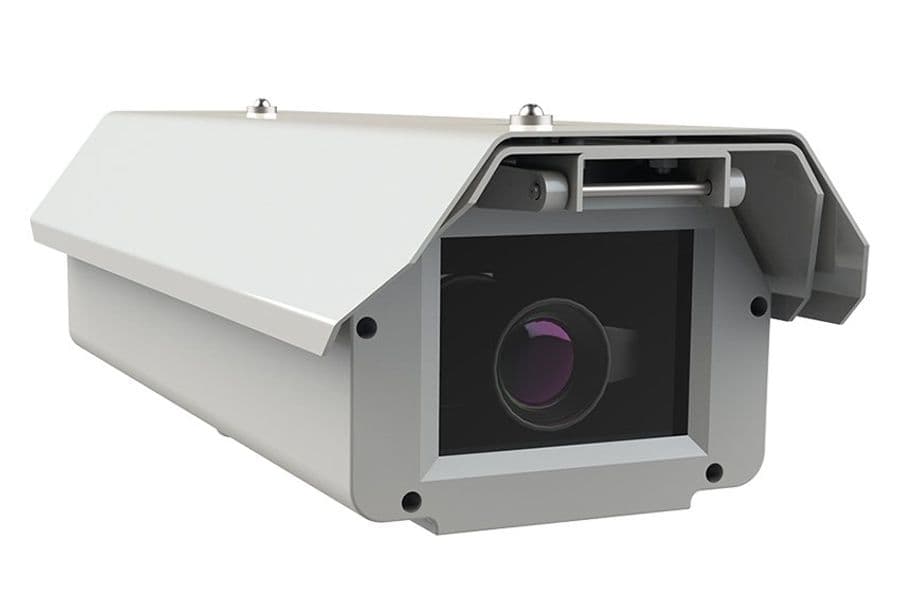
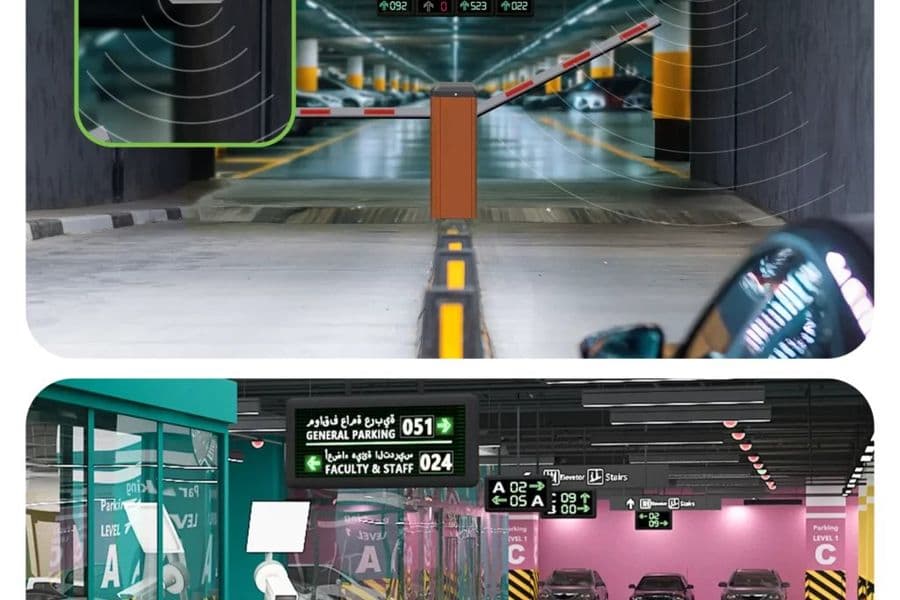
Entry and exit are where the control happens. Ticket dispensers, ANPR cameras, long-range RFID readers for registered vehicles and QR or mobile validation each suit a different user group, and most Saudi sites need several at once: staff on tags, contractors on ANPR, visitors on tickets, and VIP or reserved users on their own rule set. The system should apply the right rule automatically rather than relying on a guard's judgement.
Payment is where revenue is either captured or lost. Automatic pay stations, pay-on-foot flows, pay-on-exit lanes and mobile payment through the driver's phone all reduce cash handling and queueing. Validation for tenants, retailers and hospitals should be programmable, so a mall or clinic can offer free hours without opening a hole in the revenue that nobody can audit.
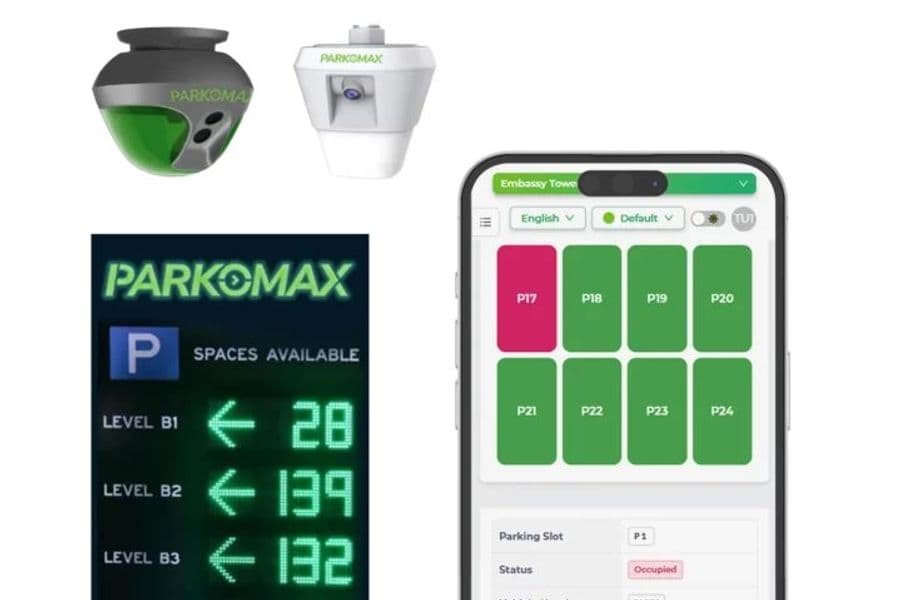
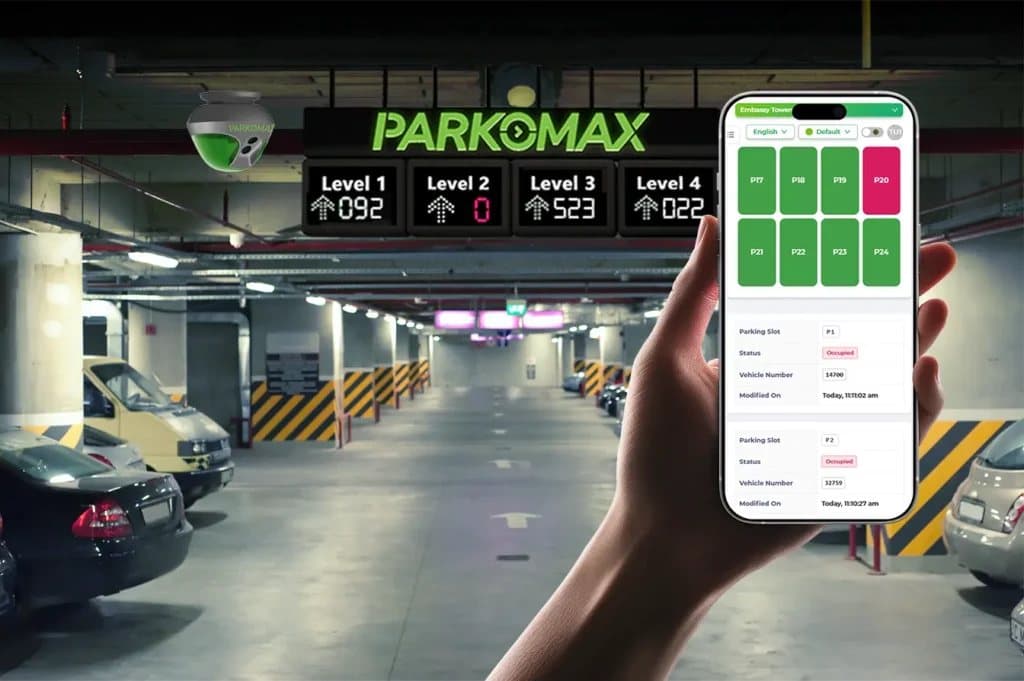
Parking guidance solves the other half of the problem. Ultrasonic or camera-based bay sensors report occupancy in real time, LED counters at each entrance and decision point send drivers straight to free bays, and find-my-car kiosks close the loop for visitors in large malls and airports. Reducing circulation time cuts queueing at the entrance, lowers exhaust build-up in enclosed decks and makes the facility measurably easier to use.
Saudi Arabia is building the facilities where this matters most: new airport terminals, mixed-use districts, hospital campuses, stadiums and event venues, and commercial towers in Riyadh, Jeddah and the Eastern Province. In these, parking is both a revenue line and a first impression, and the design decisions on lane count, queue storage and payment method are made early or regretted later.
Multi-site operators need a management layer rather than a collection of independent car parks. Central software should consolidate occupancy, revenue, tariff changes, season permits and exception reporting across sites, push a tariff change once rather than site by site, and give finance a reconciliation it can trust against cash, card and mobile channels.
Integration decides how much of this works in practice. The parking system needs to talk to the barrier and gate hardware, the building access control platform, ANPR, CCTV, payment acquirers and, increasingly, the tenant or visitor app. We plan those interfaces before the hardware ships, because retrofitting an integration into a live car park is the most expensive way to discover it was never scoped.
We deliver design support and tender documentation for consultants, coordinated civil, power and network requirements for contractors, and commissioning, operator training, tariff configuration and maintenance for the operator. Equipment in a Saudi car park deck works in heat and dust year round, and preventive maintenance on barriers, printers, sensors and pay stations is the difference between a system that earns and one that gets propped open.