Industries
Energy, Oil, Gas & Petrochemicals
Security engineered for classified areas, salt air and round-the-clock operations
Perimeter protection, explosion-proof door hardware, vehicle screening and access control for refineries, gas plants, tank farms and offshore support bases across the Eastern Province — supplied, installed and maintained from our Al Khobar office.
A hydrocarbon facility is not a building with a fence around it; it is a process that cannot be stopped. Closing a gate for ninety seconds can idle a truck convoy feeding a turnaround, and an alarm inside a classified area triggers a permit-to-work review rather than a guard walking over. Security here is judged first on what it does to production, and only then on whether it stops an intruder.
The hazardous-area classification decides the hardware. Inside Zone 1 and Zone 2, an ordinary maglock, door operator or turnstile controller is not permitted — the enclosure has to be certified for the atmosphere it sits in. This is where most specifications come apart: the access control scheme is designed for the admin building, then copied onto doors in the process area where it cannot lawfully be installed.
Explosion-proof door hardware is the piece competitors rarely carry. We supply certified locking, exit devices and door operators for control rooms, substations, analyser houses and switchgear buildings inside classified zones, so the access control scheme runs continuously from the main gate into the process area instead of stopping at the fence line of the admin block.
Eastern Province salt corrosion decides service life. Equipment within a few kilometres of the Gulf — Al Khafji, Tanajib, Ras Tanura, Jubail — sees chloride-laden air all year, and untreated carbon steel bollard housings and barrier cabinets bloom with rust inside a season. We specify marine-grade stainless, hot-dip galvanising and duplex coatings, and we size maintenance around washdown intervals rather than a generic annual visit.
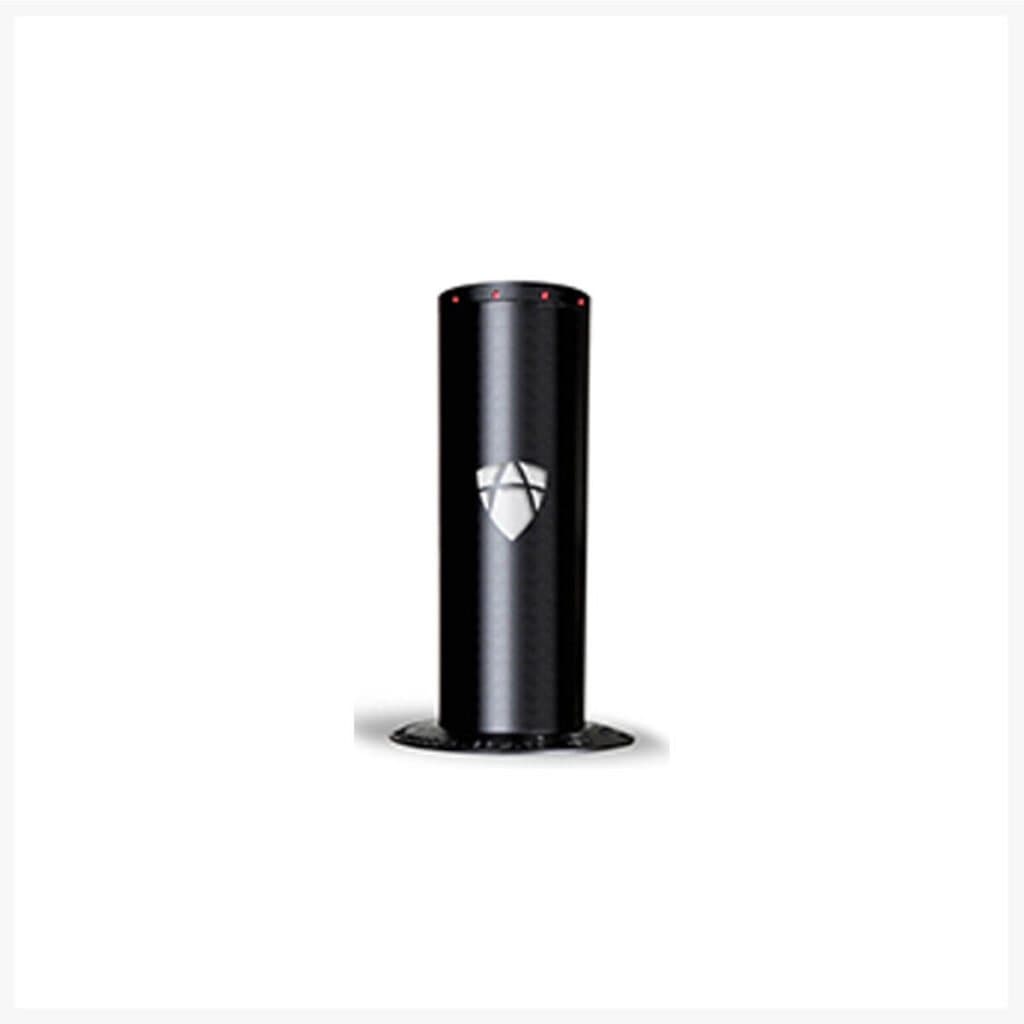
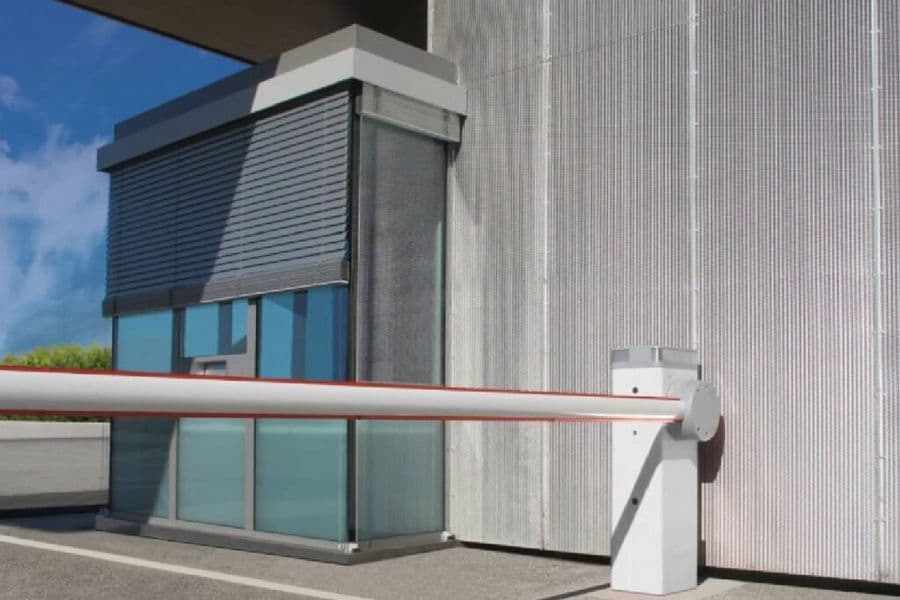
Vehicle control at a plant gate is a throughput problem before it is a security problem. Tanker traffic, contractor buses and shift changes arrive in surges, so we design lanes against a measured peak: crash-rated road blockers or bollards on the hostile-vehicle line, under-vehicle inspection and ANPR for identification, and a separate contractor lane so one failed credential does not stop the queue behind it.
Drones have changed what a perimeter means. A fence and a camera line say nothing about what crosses above them, and flare stacks, tank farms and marine loading points are all visible from well outside the boundary. Anti-drone detection and mitigation now belongs in the same conversation as fencing and intrusion detection, and we supply it as part of the perimeter rather than as a later, separate system.
Stebilex has delivered in this environment — at Al Khafji for KJO, at Tanajib for the Jana Marine camp and office, and in Dammam — and the Al Khobar office sits inside the same Eastern Province cluster as the plants it serves. That matters when a barrier is down at two in the morning and the alternative is waiting for a technician to fly into the Kingdom.
What we supply for this sector
Crash-rated vehicle barriers at the plant gate
Fixed and retractable bollards, road blockers and crash-rated beam barriers selected against a named test standard, sized for tanker and convoy traffic, and founded for the ground conditions on site.
Explosion-proof door hardware
Certified locking, exit devices and door operators for control rooms, substations, analyser houses and switchgear buildings inside classified areas.
Anti-drone detection and mitigation
Airspace monitoring over tank farms, flare stacks and loading points, integrated with the ground perimeter rather than run as a separate system.
Vehicle screening and identification
Under-vehicle inspection and ANPR at the main gate, with separate contractor lanes so screening does not stall the queue behind it.
Access control, biometrics and attendance
Card, mobile and biometric credentials with short-term contractor enrolment, time and attendance, and integration to the site permit process.
Corrosion-rated specification and servicing
Marine-grade stainless, hot-dip galvanising and duplex coatings, with service intervals set against washdown and salt exposure rather than a fixed annual date.
Delivered in the Kingdom

What typically goes wrong
The failures we are called in to correct, and the ones worth designing out at specification stage.
Access control designed for the admin building, then specified onto doors inside classified Zone 1 and Zone 2 areas where it cannot be installed.
Carbon-steel barriers and enclosures that corrode within a season in chloride-laden Eastern Province air.
Gates sized for average traffic, which then gridlock at shift change and during turnaround deliveries.
Perimeter schemes that address the ground line only, leaving the airspace over tank farms and flare stacks unaddressed.
Contractors and tanker drivers issued permanent credentials because no short-term visitor process exists.
Maintenance held outside the Kingdom, so a failed barrier waits days for a technician.