Solutions
Hostile Vehicle Mitigation & Perimeter Security
Stop the vehicle at the boundary, not at the building
Crash-rated bollards, road blockers, tyre killers and security fencing that arrest a hostile vehicle at your perimeter line. Specified, supplied, installed and maintained across Saudi Arabia from Al Khobar and Riyadh.
A perimeter is only as strong as the point where vehicles cross it. Fences, cameras and guards deter and detect, but none of them physically stops a seven-tonne truck driven deliberately at an entrance. Hostile vehicle mitigation closes that gap with engineered, impact-tested barriers that absorb the energy of a ramming attack and arrest the vehicle before it reaches people, plant or critical assets.
Crash performance is a test result, not a marketing claim. ASTM F2656/F2656M reports a rating such as M50-P1: the letter is the test vehicle class, the number is the impact speed in miles per hour, and the P-code is how far the vehicle penetrated past the barrier. Older specifications still quote K4, K8 and K12 from the earlier US Department of State standard. Internationally, ISO 22343-1:2023 is now the current reference, having replaced both IWA 14-1 and PAS 68.
That distinction matters when a specification is being written. A barrier described only as anti-ram tells a tender nothing. We help consultants pin the requirement to a named standard, a stated vehicle mass and speed, an acceptable penetration, and a test certificate issued by an independent laboratory for the exact model and foundation detail being supplied. Many proven products still carry valid IWA 14-1 or PAS 68 ratings from earlier tests, which is legitimate provided the certificate is read rather than assumed.
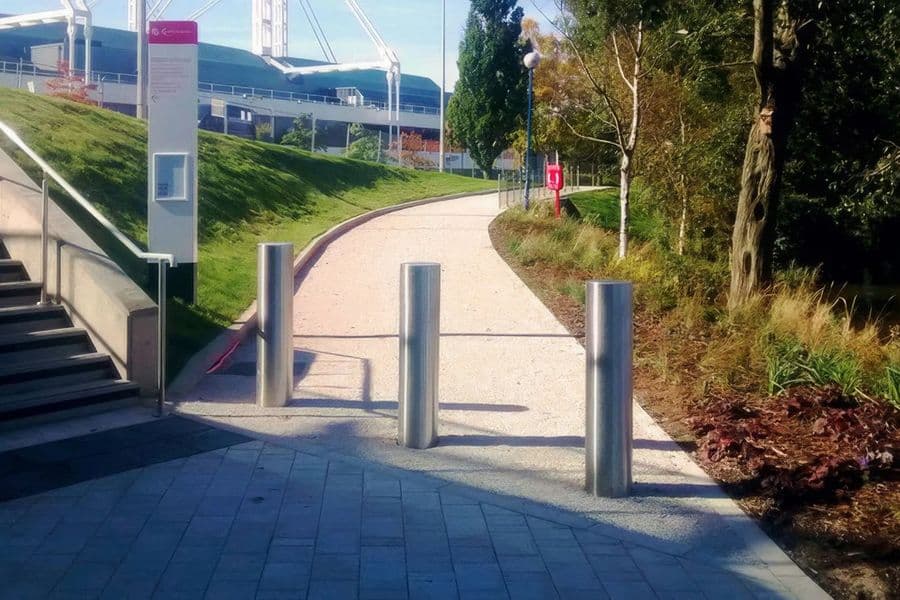
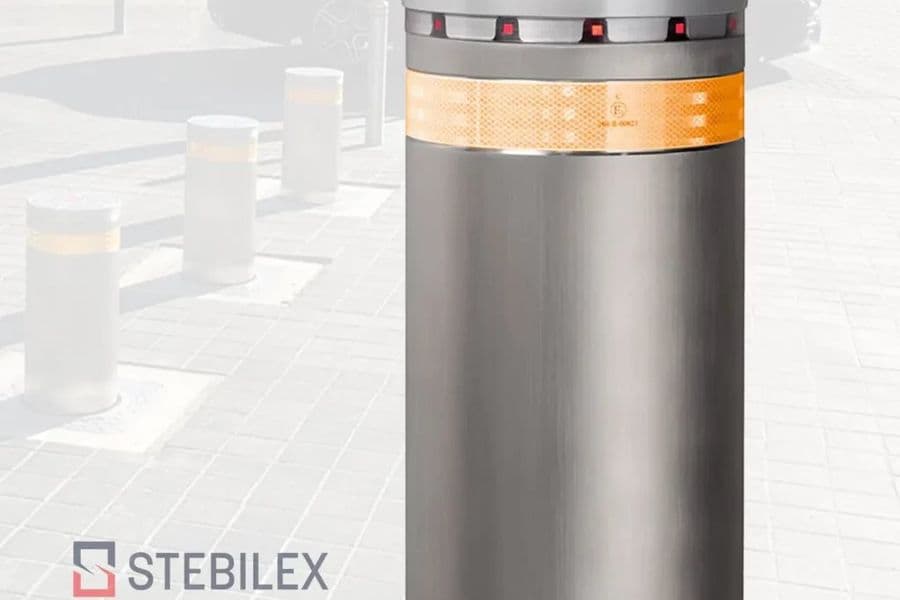
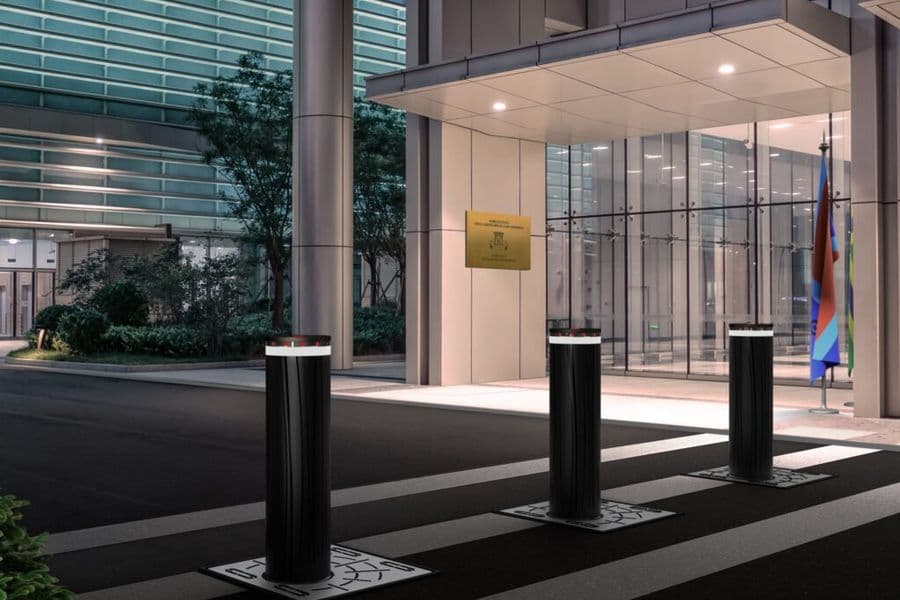
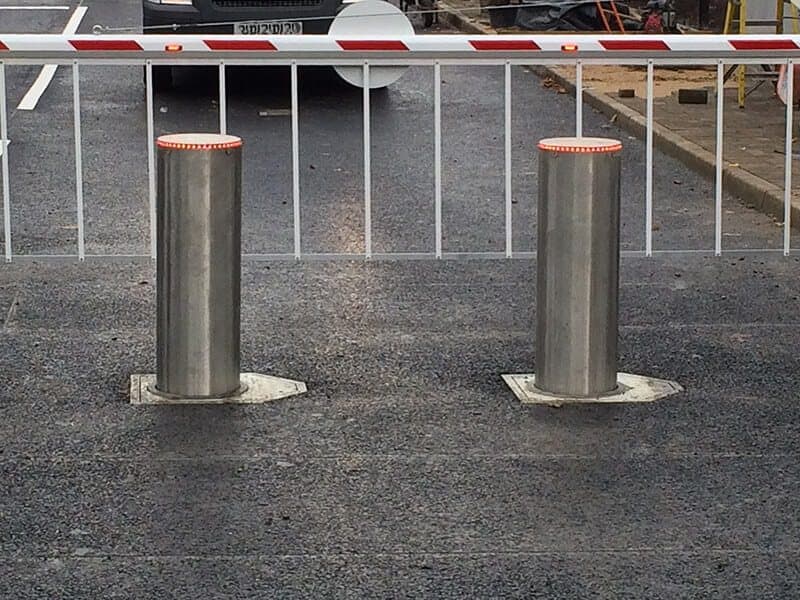
The right product depends on the opening. Fixed bollards hold a static line along a facade, plaza edge or setback. Automatic hydraulic and electromechanical retractable bollards keep a working entrance closed and drop in seconds for authorised vehicles. Road blockers and tyre killers suit wide carriageways and truck gates. Crash-rated beam barriers and sliding gates cover long spans where an array of bollards will not fit or cannot be founded.
Security that obstructs operations gets switched off. We size each lane against measured traffic: cycle time, queue length, loop and safety-sensor layout, and emergency fast operation that raises the barrier in roughly one second on a guard command. Hand-pump and manual release keep the lane usable through a power failure, and the whole sequence is interlocked with the guardhouse, ANPR and the site access control system.
Eastern Province conditions are unforgiving. Salt-laden humidity around Jubail, Ras Tanura and Al Khobar attacks fasteners, cylinders and hydraulic fittings, while inland sites in Riyadh and the Northern Borders add fine sand and surface temperatures that thin hydraulic oil. We specify hot-dip galvanising and marine-grade finishes, sealed pits with drainage and pumped sumps, and service intervals matched to the site rather than to a generic datasheet.
Most HVM packages fail on civil coordination rather than hardware. Foundation depth and reinforcement, drainage falls, duct routes and the position of buried services all have to be resolved before concrete is poured. We issue shop drawings, foundation and load data and builder's work details early enough for the main contractor and MEP subcontractor to build them in, instead of breaking out finished work later.
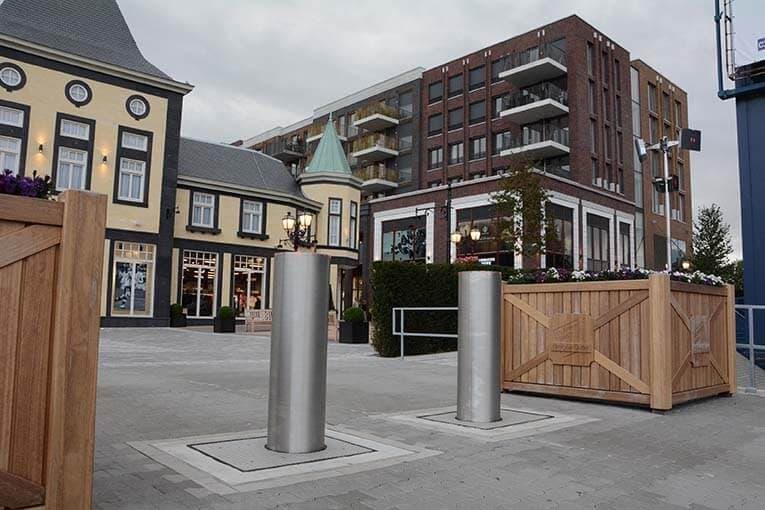
Vehicle barriers are one layer. Alongside them we supply anti-climb and intruder-detection fencing, crash-rated planters and street furniture for public realm schemes where a visible barrier is unwelcome, and anti-drone fencing for sites where aerial approach is a live concern, such as substations, fuel storage and energy assets. Consultants get specification support, contractors get delivery on programme, and facility teams get commissioning records, spares and a maintenance contract.