Solutions
Homeland & Border Security Screening
See inside the vehicle, the cargo and the bag before it enters
Under-vehicle inspection, X-ray baggage and cargo screening and checkpoint detection for borders, ports, energy assets and government facilities. Supplied, integrated and supported in Saudi Arabia.
Access control answers who is at the gate. Screening answers what they brought with them. At a border post, a port terminal, a refinery gate or a ministry entrance, the credential can be genuine while the vehicle carries something that should never cross the line. Detection technology is what turns a checkpoint from an identity check into an actual inspection.
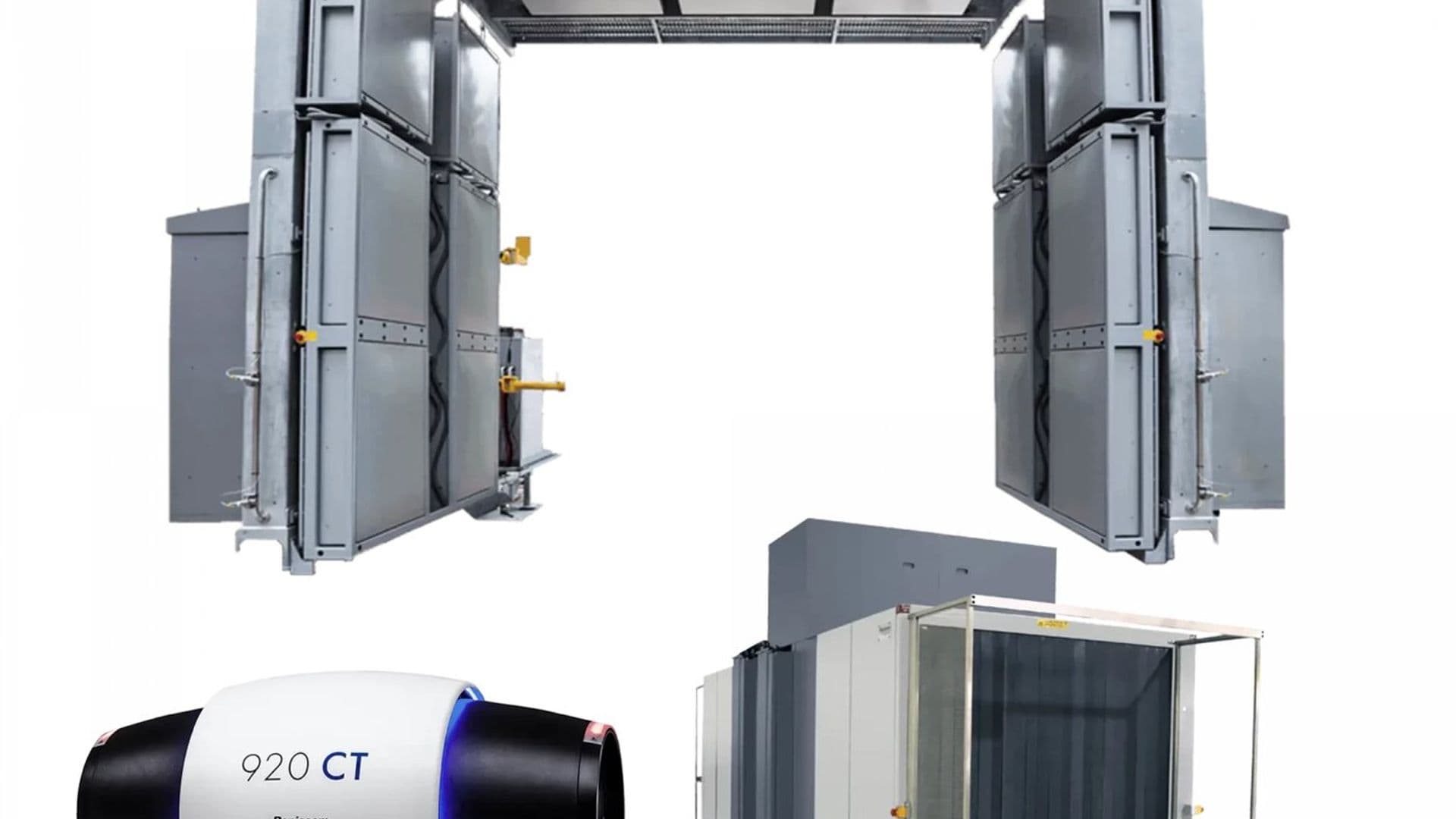
Under-vehicle inspection systems capture a high-resolution image of the entire underbody as a vehicle drives over the scanner, then compare it against the stored reference image for that plate. Anomalies are flagged for the operator in seconds. Paired with automatic number plate recognition, the system builds a searchable record of every vehicle, every pass and every exception, which is exactly the audit trail an incident review or an insurer will ask for.
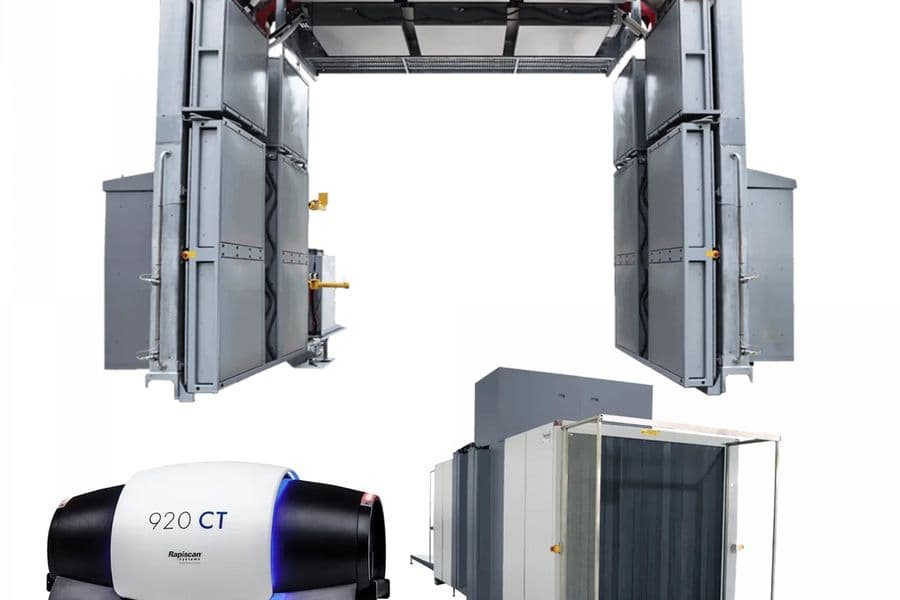
X-ray screening covers everything the vehicle is not carrying underneath. Cabinet scanners handle bags, parcels and hand-carried items at lobbies, courthouses and stadium gates. Larger tunnel and pallet configurations take palletised freight and air cargo. Dual-energy imaging separates organic from inorganic material by colour, so an operator is judging shape and density rather than guessing from a flat grey image.
Throughput is the number that decides whether a checkpoint works. A screening lane that is technically capable but operationally slow simply moves the queue onto the public road outside your gate. We model expected arrivals, size the number of lanes, and set the balance between automated alerting and manual secondary inspection so that peak shift changes at an industrial site or matchday arrivals at a venue do not collapse the plan.
The Kingdom's exposure is unusually broad: long land borders, a heavy seaport and logistics network on both coasts, upstream and downstream energy assets concentrated in the Eastern Province, and a rapidly growing calendar of international events and visitors. Each of those sites has a different threat profile and a different tolerance for delay, and the screening specification has to reflect that rather than repeat a template.
Screening hardware is only useful if the operator can act on what it shows. We integrate detection systems with the site's access control, barrier and CCTV platforms so that a flagged vehicle does not simply produce an alert on a screen: the barrier stays down, the guard is directed to the secondary inspection bay, and the event is logged with images against the vehicle and driver record.
Procurement teams in government and semi-government entities work to documented evaluation criteria. We support that process with clear technical submittals, published detection and imaging specifications, radiation safety documentation for X-ray equipment, operator training plans and a defined maintenance and calibration regime, so that the evaluation can be made on evidence rather than on brochure language.
Delivery covers survey, civil and electrical requirements, installation, commissioning and operator training, followed by preventive maintenance and spares from our Al Khobar and Riyadh offices. For remote border and energy sites, we plan for parts availability and response time upfront, because a scanner that waits three weeks for a component is a lane that is not being screened.