Industries
Commercial Property, Healthcare & Education
Open buildings that still know who is inside
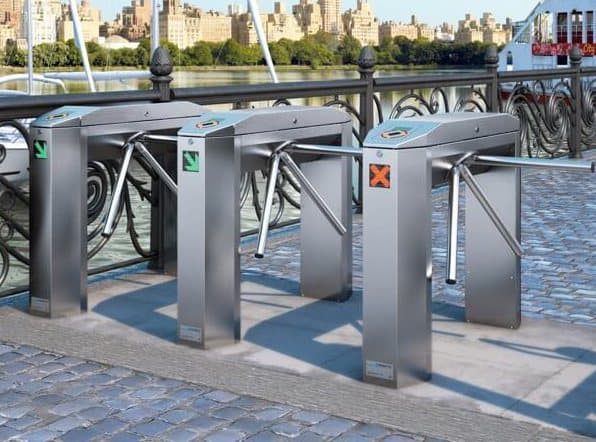
Access control, entrance control, parking and door automation for offices, towers, hospitals, clinics, schools and universities — buildings that have to stay welcoming while controlling who reaches the areas that matter.
These buildings cannot be closed. An office tower wants tenants and visitors to walk in, a hospital cannot obstruct a patient, and a campus is a public place by design. Security therefore has to be selective rather than absolute: almost everything open, a small number of areas genuinely controlled, and a clear record of who crossed into them.
Multi-tenant towers are an administrative problem more than a technical one. Each tenant wants to manage its own floor without seeing its neighbours' data, the landlord needs lobby speed gates and lift destination control, and the building manager issues and revokes contractor credentials daily. Choosing a platform that supports tenant partitioning early avoids a rebuild at fifty per cent occupancy.
Hospitals have zones the rest of the building should never reach: theatres, pharmacy, neonatal, records and plant rooms. The controls need to be quiet and hands-free — automatic doors with touchless activation, readers that work with a gloved hand or a badge at the wrist, and fail-safe behaviour on fire alarm coordinated with the clinical evacuation plan rather than assumed.
Schools and universities are about the boundary and the register. A controlled campus gate, ANPR on staff parking, turnstiles at student entrances and attendance tied to the same credential give a defensible perimeter without making the site feel like a checkpoint. Parents and visitors need a supervised route that does not pass through student areas.
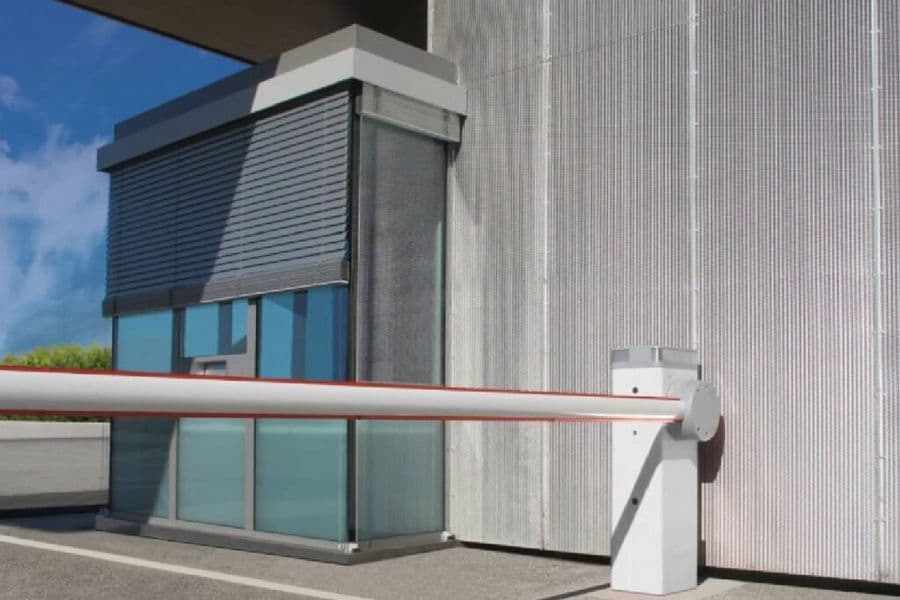
Parking is usually the first system anyone actually touches. Barriers, ANPR, guidance and payment define the arrival experience for every staff member and visitor, and a badly designed entry lane backs traffic onto a public road within weeks of opening. Lane counts, queue space and payment method belong in the design stage, not in commissioning.
Door automation is the highest-cycle equipment in most of these buildings. A main entrance can exceed a million cycles a year, with conditioned air on one side and 45 °C on the other. Operators, seals and sensors wear under that duty, and planned servicing costs far less than an entrance failing at the peak of summer.
Long service life is the recurring theme. Commercial, healthcare and education assets are held for decades and refurbished in occupied phases, so equipment has to be replaceable in a live building and the manufacturer has to still be supportable inside the Kingdom years later. We supply and maintain from Al Khobar and Riyadh with that timeline in mind.
What we supply for this sector
Access control and credential management
Card, mobile and biometric credentials with tenant partitioning, role-based rights and daily contractor issue and revocation.
Lobby speed gates and entrance control
Optical speed gates and turnstiles with lift destination control, sized for tower and campus arrival peaks.
Automatic and touchless door systems
Sliding and swing door operators, touchless activation and gloved-hand readers for clinical and high-traffic areas, with fail-safe behaviour agreed against the evacuation plan.
Parking management and guidance
Barriers, ANPR, bay guidance and payment, with entry lanes and queue space designed so traffic never reaches the public road.
Campus and visitor control
Controlled campus gates, student entrance turnstiles, attendance on the same credential, and a supervised visitor route that avoids student areas.
Planned maintenance from Al Khobar and Riyadh
Servicing, spares and phased replacement that can be carried out in an occupied building over an asset life measured in decades.
Delivered in the Kingdom
What typically goes wrong
The failures we are called in to correct, and the ones worth designing out at specification stage.
Access platforms chosen without tenant partitioning, then rebuilt once the tower fills.
Clinical areas secured with hardware that slows staff carrying equipment or wearing gloves.
Campus entrances that control students but leave visitor and delivery routes unmanaged.
Car park entries with too little queue space, backing traffic onto the public road.
High-cycle automatic doors with no planned servicing, failing at the peak of summer.
Fire alarm behaviour on secured doors assumed rather than agreed with the evacuation plan.