Solutions
Entrance Control: Turnstiles & Speed Gates
One authorised person per valid credential, every single time
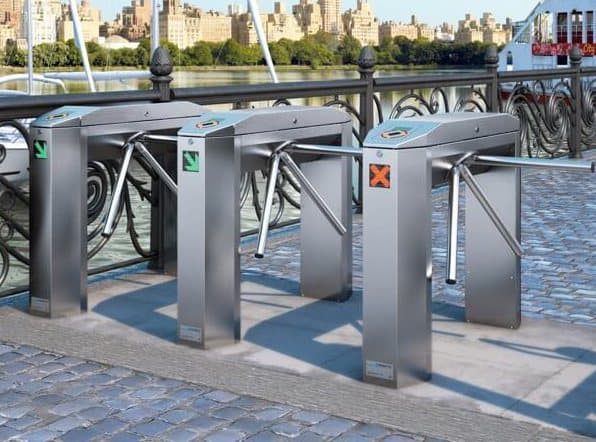
Tripod and full-height turnstiles, optical speed gates and swing gates that enforce single-person passage and keep lobbies, stadiums and industrial sites moving. Supplied and installed across Saudi Arabia.
A card reader on a door proves someone presented a credential. It does not prove that only that person went through. Tailgating is the single most common failure in building security, and it is invisible in the access log: the system records one valid entry while three people walked in. Entrance control hardware is what makes the log match reality.
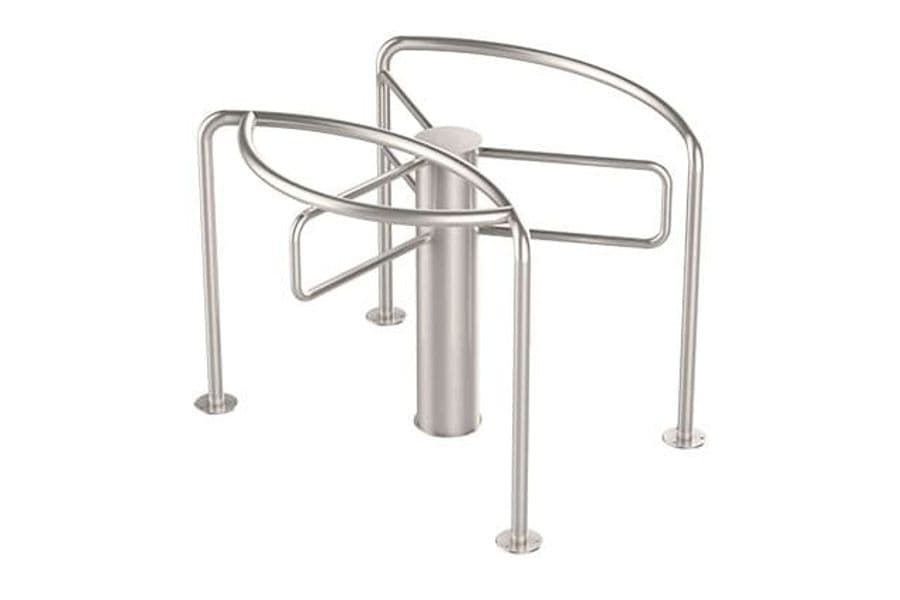
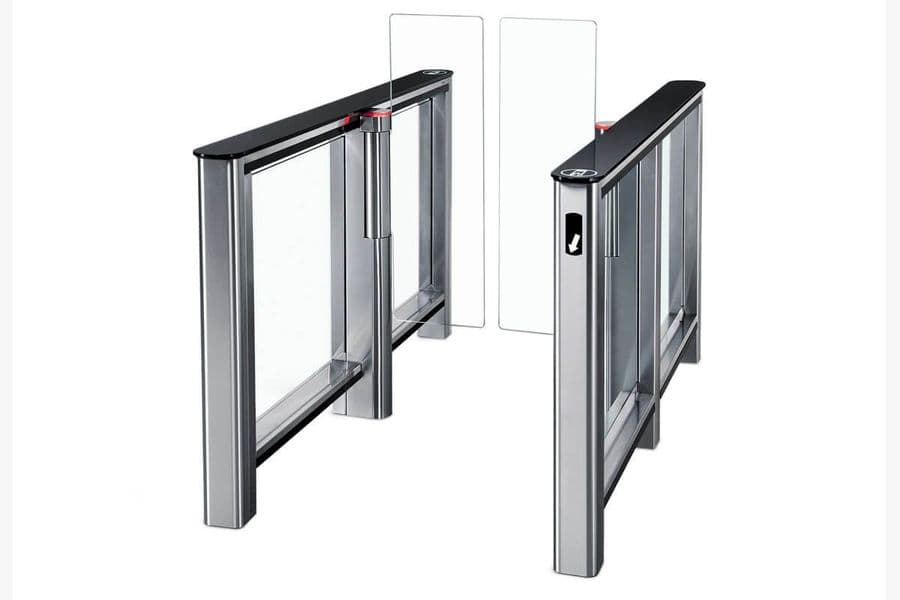
The choice of product is a trade-off between security, throughput and appearance. Optical speed gates with glass panels suit corporate lobbies and museums where the entrance is part of the architecture, reading the passage with infrared sensor arrays to detect a second body. Tripod turnstiles are the cost-effective workhorse for staff entrances and worker accommodation. Full-height turnstiles remove the option of climbing or crawling entirely, which is why they dominate industrial and utility perimeters.
Throughput drives the lane count. A speed gate typically clears passages far faster than a tripod unit, but the real constraint is usually the credential, not the mechanism: a fingerprint reader with a two-second match time will bottleneck a gate capable of much more. We size entrances from the actual arrival pattern, whether that is a 07:00 shift change at a plant or a stadium concourse filling in twenty minutes.
Accessibility and life safety are not optional extras. Every bank of gates needs a wide accessible lane for wheelchairs, trolleys and deliveries, and every lane needs a defined behaviour on fire alarm and power loss: panels that drop or swing free to a safe egress condition, interlocked with the fire alarm panel. EN 17352 covers safety in use of power operated pedestrian entrance control equipment and is the right standard to name in a tender, rather than the pedestrian door standards that are often cited by mistake.
Saudi sites push equipment hard. Outdoor full-height turnstiles at a plant gate in Jubail or a labour accommodation in Riyadh face dust, direct sun and long duty cycles, so we specify hot-dip galvanised or stainless frames, sealed drive housings, appropriate IP ratings and canopy protection. Indoor speed gates in a Riyadh or Jeddah headquarters are chosen instead for finish, glass quality and the noise they make at 08:00 in a marble lobby.
Entrance control is only as good as what it is wired into. We integrate turnstiles with access control platforms, biometric readers, visitor management, ticketing systems and workforce software, so the same passage that opens the lane also records attendance, enforces a safety induction requirement, or validates a paid ticket. On construction and industrial sites this is often the point of the project: nobody enters without a valid induction and a valid pass.
For consultants, we provide lane layout drawings, throughput calculations, power and data requirements and finish schedules that can be dropped into a tender package. For contractors, we coordinate plinth details, floor boxes and containment early, because an entrance control bank installed after the marble is laid costs far more than one designed alongside it.
Installation, commissioning, staff training and a maintenance contract are handled by our own team from Al Khobar and Riyadh. Entrance control is high-cycle equipment: rotor bearings, drive units and sensor arrays are consumables on a busy lane, and a planned service and spares agreement is what keeps the lane open rather than propped with a chain.