Industries
Government, Ministries & Defence
Documented to survive technical evaluation, not just to stop a vehicle
Perimeter protection, entrance control, screening and access management for ministries, municipalities and defence and security facilities — delivered with the certification evidence and documentation that government procurement actually asks for.
Government work is won or lost on documentation. The barrier that stops the vehicle matters, but the file that proves it — the independent test certificate, the foundation drawing it was tested on, the manufacturer's authorisation letter for the Saudi territory — is what survives technical evaluation. A compliant product with an incomplete file scores no better than a non-compliant one.
Ministry and municipal buildings carry a contradiction: they have to look open and serve the public while standing off a vehicle threat. The answer is usually the setback rather than the entrance. Crash-rated bollards along a plaza edge, street furniture and planters that are rated rather than decorative, and a controlled lane for staff and deliveries keep the frontage civil without leaving it exposed.
Inside, the problem becomes identity. A ministry has staff, seconded contractors, visiting officials and members of the public in the same lobby, and they cannot share one set of rights. The arrangement that holds is speed gates for staff, a supervised and screened visitor lane, and a segregated route to secured floors — and it has to be designed before the lobby is finished, not after.
Defence and security-sector sites add clearance and confidentiality constraints. Drawings cannot circulate freely, survey visits need permits, and commissioning happens in agreed windows. We are used to working inside those conditions: named personnel, controlled document handling, and a delivery plan that assumes escorted access rather than an open site.
Screening at the entrance is an operational decision as much as an equipment one. X-ray baggage units and walk-through detection only work if the lane layout gives operators somewhere to divert a suspect bag and somewhere to hold a queue out of the heat. We set the search area out with the security manager before the equipment is ordered.
Vision 2030 has moved a great deal of government service delivery into new buildings and digital platforms, and the physical layer has to keep pace. Work with organisations such as ELM shows the pattern: national systems handling sensitive data need entrance control, access management and audit records that stand up to the same scrutiny as the systems running inside them.
Long-life procurement favours serviceable equipment. A government building is held for decades, and a barrier from a manufacturer with no authorised representation in the Kingdom becomes unmaintainable the moment the contractor demobilises. We hold authorisation for the brands we supply and service them from Al Khobar and Riyadh, which is the argument that matters in year six rather than year one.
What we supply for this sector
Crash-rated perimeter and setback protection
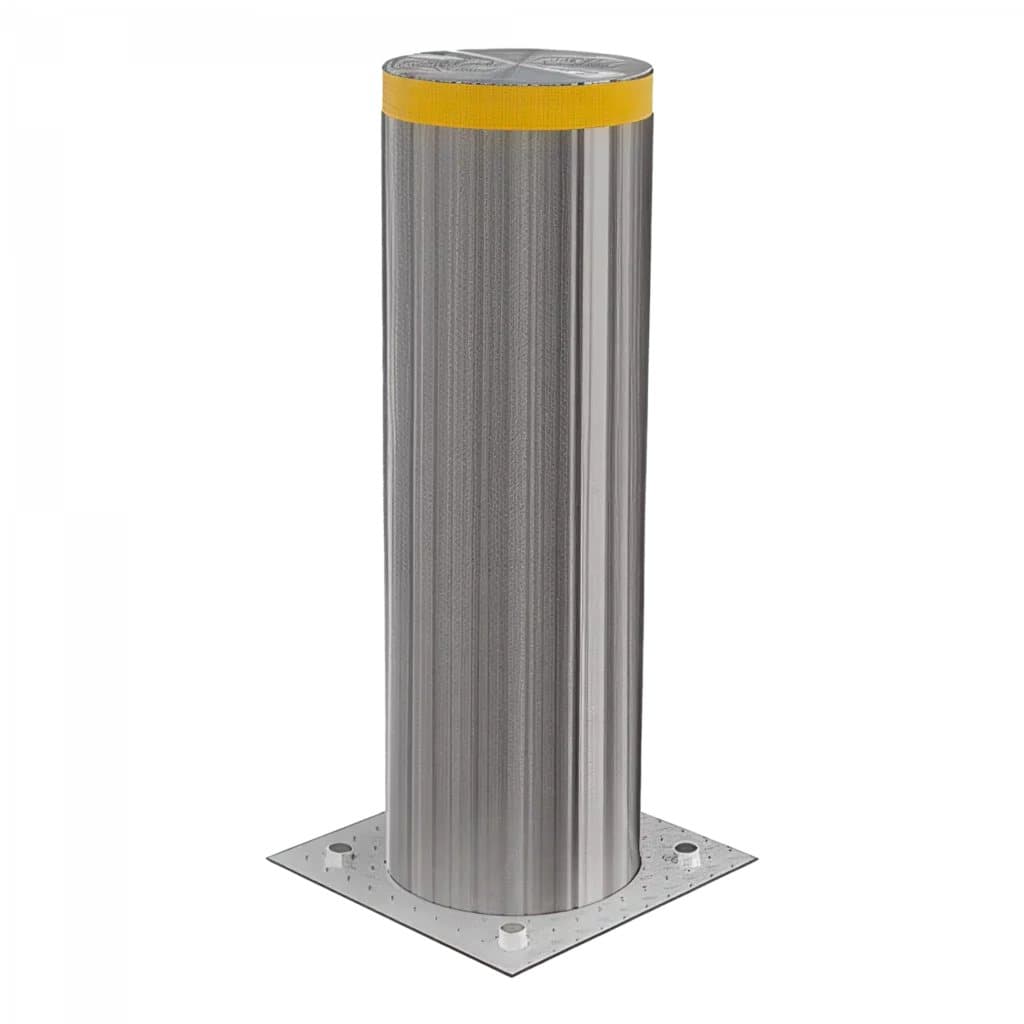
Fixed and retractable bollards, road blockers and rated street furniture placed on the setback line, with the test certificate and foundation detail supplied as part of the submission.
Entrance control and visitor management
Speed gates for staff, full-height turnstiles at controlled perimeters, and a supervised visitor lane with a segregated route to secured floors.
Screening and detection
X-ray baggage and parcel screening, under-vehicle inspection and walk-through detection, laid out with the security manager so the search area works under load.
Access control with an audit trail
Card, mobile and biometric credentials, role-based rights for seconded staff and contractors, and exportable records of every crossing into a controlled area.
Tender and specification support
Test certificates, authorisation letters, foundation details and equipment schedules prepared in the form technical evaluation committees expect.
Maintenance from Al Khobar and Riyadh
Planned servicing, spares and technical support inside the Kingdom, for assets held decades rather than for a defects liability period.
Delivered in the Kingdom
What typically goes wrong
The failures we are called in to correct, and the ones worth designing out at specification stage.
Tenders asking for anti-ram protection without naming a test standard, vehicle mass or speed, so non-comparable products are scored side by side.
Certification files that omit the foundation detail the barrier was actually tested on.
Public-facing lobbies designed before anyone decides how visitors, staff and contractors will be separated.
Screening equipment ordered before the search lane is laid out, leaving nowhere to divert a bag or hold a queue.
Equipment from manufacturers with no authorised representation in the Kingdom, unserviceable once the contractor leaves.
Vehicle protection added to a finished frontage, when the setback needed to make it work no longer exists.