Industries
Data Centres
Five layers between the fence and the rack
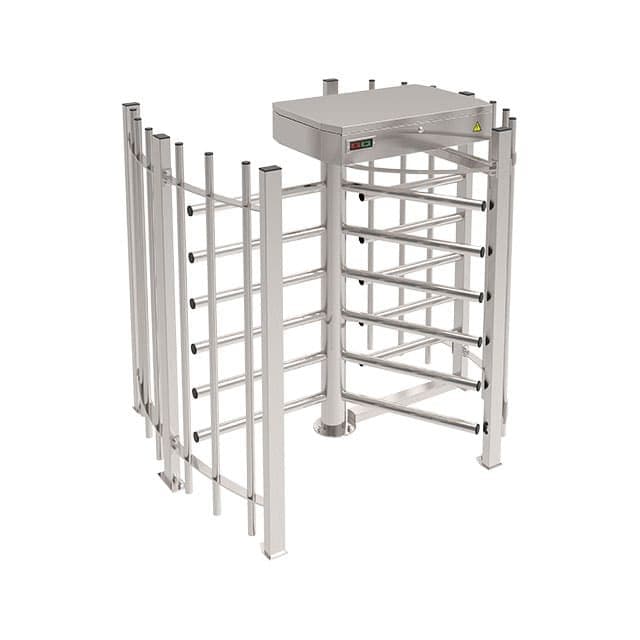
Perimeter, yard, building envelope, data hall and rack — mantrap portals, anti-tailgating detection, biometric credentials and audit-ready access records for the hyperscale and colocation capacity being built across the Kingdom.
A data centre is audited, not merely secured. Tier certification, ISO 27001 and customer audits all ask the same question in different words: can you prove who was in the white space, when, and who authorised it. That turns access control from a door-opening system into an evidence system, and it changes what should be bought.
The standard model is five layers — perimeter, yard, building envelope, data hall and the rack itself — with a credential step between each one. What breaks it in practice is a single door held open by a trolley during an equipment delivery. Anti-tailgating detection, interlocked mantrap portals and a goods route that does not pass through the data hall are what keep the layers honest.
Biometrics are effectively mandatory at the inner layers because a card can be handed over. Face or iris recognition at the data hall door, combined with a card or mobile credential, gives a two-factor step an auditor can read straight from the log. Rack-level electronic locking closes the last gap in shared colocation halls.
Construction sequencing is the practical risk. Data centres are built fast, and the security system is usually the last trade into a room other trades are still working in. Containment, conduit and door openings have to be agreed at shell and core, or the mantrap ends up somewhere with no room for its second door.
Heat and dust set the outdoor specification. Perimeter cameras, ANPR units and gate operators on a Riyadh site work through months above 45 °C and repeated dust events. We specify enclosures, motors and coatings for that duty cycle, and we write filter and seal servicing into the maintenance contract instead of waiting for the first failure.
Vision 2030 and data-residency rules have pulled hyperscale and colocation capacity into the Kingdom, much of it commissioned on compressed programmes. Being able to survey, supply and commission from Riyadh and Al Khobar — rather than flying specialists in for each phase — is usually what keeps the security scope off the critical path.
What we supply for this sector
Layered perimeter and vehicle control
Fencing, intrusion detection, crash-rated bollards and barriers at the site entrance, with a separate delivery route that never crosses a secured layer.
Mantrap portals and anti-tailgating
Interlocked portals at the building envelope and data hall, with detection for two people entering on one credential.
Biometrics at the inner layers
Face or iris recognition combined with a card or mobile credential, giving a two-factor step that reads clearly in an audit log.
Rack-level electronic locking
Cabinet locking for shared colocation halls, with an open-and-close record per rack tied to the same credential platform.
Audit-ready reporting
Exportable access records linking every crossing to a person, an authorisation and a timestamp, for tier certification and customer audits.
Maintenance for heat and dust
Enclosures, motors and coatings specified for a Riyadh duty cycle, with filter and seal servicing scheduled into the contract.
What typically goes wrong
The failures we are called in to correct, and the ones worth designing out at specification stage.
Access records that cannot answer who was inside the data hall at a given hour.
Doors held open during equipment deliveries because the goods route runs through a secured layer.
Mantrap portals designed in after shell and core, with no room left for the second door.
Card-only credentials at the data hall, so access can be handed to anyone.
Outdoor equipment rated for a temperate climate, failing in its first Riyadh summer.
Security left as the last trade into a room other trades have not finished with.